From Retrofits to New Installs: FireKing Commercial Garage Door Installation Alternatives
Commercial doors are not simply large slabs of steel and springs. They are the heartbeat of a building's flow, the guardrails for safety and security, and the very first thing to jam your schedule if they are picked or installed inadequately. FireKing teams invest a lot of time on task sites with clipboards and laser tapes, and the tales are often the very same. A new procedure requires speed, reliability, and code compliance. A retrofit requirements regard for the bones of an older structure and a strategy that fits real-world restrictions. Fortunately is, you have exceptional options for both.
What changes when you retrofit versus construct new
On a new develop, the illustrations usually give us a clean opening, correct headroom, and a power stub at the operator's side. Equipment, bracing, and the door system can be developed as a plan. Timelines make sense, the piece holds true, and the door is set up in sequence with various other professions. The sychronisation is still critical, but you have room to maximize without peeling off back layers of history.
Retrofits are where experience repays. Existing lintels could be out of level by 3 quarters of an inch. Jambs that made use of to hold a wood door are as well soft for a rolling steel barrel. Clearance is tight because somebody years ago put ductwork a little too close to the opening. We regularly adjust with low-headroom track kits, alternate mounting angles, and creative supporting that values structural ability. You also need a plan for web traffic. Shutting down a dock door for even half a day can snarl the entire procedure. That is why a functioning retrofit commonly means pre-assembling sections, organizing hardware, and organizing crane time during low-volume hours.
A quick example from a cold store retrofit: a client needed a high-speed material door on a 12 by 14 opening, but the evaporators left only 14 inches of clearance. By rotating the barrel to the exterior side, changing to a side-mounted electric motor, and connecting guard articles into the piece with epoxy anchors, we fit the door, maintained the clear opening, and cut seepage sufficient to minimize defrost cycles. None of that got on the original plan set. Field eyes made it work.
A fast excursion of door kinds that in fact move the needle
There is no global ideal door, only the very best door for a particular usage. Below is just how we typically mount the alternatives when preparing Business Garage Door Installation.
Sectional steel doors are the workhorse for warehouses, automobile shops, and light manufacturing. Panels secure well, R-values from about 12 to 26 are attainable with foamed-in-place insulation, and components are commonly readily available. They need headroom for track, typically 12 to 24 inches, even more for high-lift or full vertical applications. Rates are moderate, around 8 to 12 inches per second with a jackshaft or cart driver, yet they are quiet and service-friendly.
Rolling steel solution doors radiate where toughness and safety are leading concerns. They roll right into a compact coil above the opening, perfect for tight headroom. Slats can be galvanized, stainless, or light weight aluminum, with vision or air flow options. Driver speeds often tend to be 8 to 10 inches per second, though high efficiency models run faster. Moving grilles protect storefronts and car park structures while permitting ventilation.
High-speed fabric or rubber doors are the web traffic superheroes. Think 40 to 100 inches per second, with soft-bottom sides and impact-reset styles that zoom back right into the overviews after a forklift kiss. They are suitable for food and drink, cold storage, and high cycle logistics. They do not protect like an insulated sectional, but their speed minimizes air exchange, which usually matters extra in conditioned environments.
Aluminum full-view doors provide showrooms and breweries natural light and a crisp look. They are sectional in framework so you need track room, and they pair well with variable-speed drivers for smooth movement. Not the highest R-value, yet they supply presence and branding value.
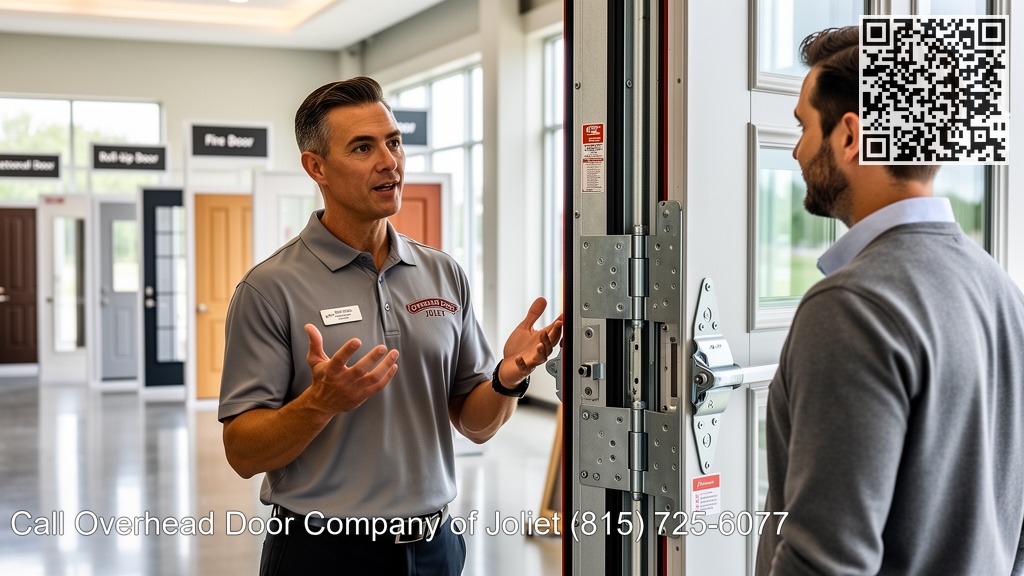
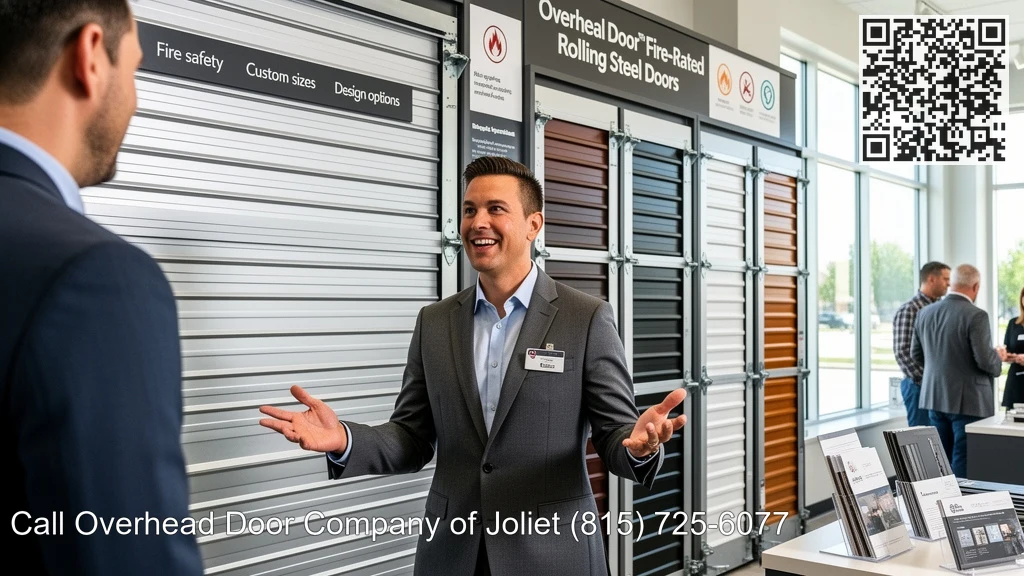
Specialty doors fill up specific niches: fire-rated moving doors and counter shutters that go down under alarm system, hurricane-rated doors for coastal areas, corrosion-resistant bundles for washdown or chemical exposure. If your spec reviews NFPA 80 or Miami-Dade, this is the lane.
Matching the door to the task cycle and environment
We start with three numbers: door size, everyday cycles, and inside conditions. A 10 by 10 door that opens up 200 times a day demands various equipment than a 14 by 16 door that relocates only in the https://travisitmu045.cloudhinter.com/posts/overhead-door-company-of-joliet-s-fireking-line-a-new-era-in-commercial-garage-door-installation early morning and mid-day. Spring option on a sectional door could leap from 20,000 to 50,000 cycle torsion sets. For high-speed units, the gearbox and brake bundle must be sized for heat dissipation throughout peak changes. When a mixer informs us they clean down with 180 level water and caustic foam, we choose stainless bolts, covered bearings, and non-hollow lower bars. For seaside or plant food applications, we lean on hot-dip galvanized or light weight aluminum parts, plus powder layer over zinc for added protection.
Insulation and air leakage matter for greater than comfort. Under IECC requirements, several conditioned spaces require doors with defined U-factors or tested air infiltration prices. An insulated sectional with thermal breaks and high-performance boundary seals can drop seepage even more than a fundamental sheet door. In a fridge freezer, rate beats raw R-value, since every second the door is open dumps expensive cold. We usually match a high-speed material indoor door with an insulated sectional or rolling steel exterior door, producing an air lock that stabilizes efficiency and security.
Power, controls, and safety and security that teams trust
Operator option is a huge component of Business Garage Door Service preparation. For light task, a single-phase 120 or 240 volt jackshaft does penalty. Hefty doors, high cycle usage, and lots of moving steel systems do far better with 3-phase power at 208, 230, or 460 volts. Variable frequency drives include soft beginning and quit, cut tension on the door, and decrease sound. You will really feel the distinction on a tall high-lift where panel rattle vanishes and the driver moves to a stop.
Safety is not optional. UL 325 compliance needs monitored security devices. That implies picture eyes or a monitored noticing edge linked into the driver, not just a tradition non-monitored side. On high-speed doors, we such as light curtains that cover the lower 6 feet of the opening because they catch more than a solitary beam of light. For fire-rated rolling doors, launch tools need to link to the alarm system and test every year. We document decline examinations and keep those documents on data so your AHJ is happy.
Access control has developed. Keypads, closeness cards, wireless remotes, interlocks with dock levelers, and structure management system linkups are routine. With wise controllers, you can track cycle matters, routine auto-close times, or get a sharp if a door falls short to secure. That is specifically valuable in refrigerated rooms and clean locations where a door exposed also 5 mins develops waste.
Framing, bracing, and the physics behind a peaceful, true door
A door that runs real beginnings with solid mounting surfaces. On retrofits, we often include steel tube structures to create plumb, square jambs when stonework has wandered. For rolling steel doors, appropriate accessory of wall angles and barrel assistance layers avoids racking that chew out guides. On sectionals, we choose the best track type: conventional lift to clear a low mezzanine, high-lift to adhere to a rising ceiling, or full upright to maintain trucks clear. Track scale and angle bracing have to match the door weight and usage. A 24 gauge, 10 foot door in a light automobile bay does not require the exact same muscle as a 14 by 16 wind-rated door on a distribution center.
Wind is an additional silent wrongdoer. In coastal or open prairie atmospheres, design pressures rise. We specify wind lots rankings to match neighborhood codes, in some cases 130 to 170 miles per hour equivalent pressures. That suggests larger struts, stiffer tracks, beefier bolts, and occasionally smaller panel periods. If you have ever watched an inadequately braced door pant in a tornado, you recognize why this matters.
How the installation day actually unfolds
A clean mount is choreography. For a sectional replacement, we protect the opening, shut out the old driver, release and bar the springs, then take down the panels and track. We prepare the jambs, established brand-new braces, hang track plumb and level, and stack panels with appropriate hinge placement. Springs obtain wound with a torque chart and range analysis that confirms safe equilibrium. We set cables, examination traveling, and tune the driver limitations. Good crews cycle the door consistently at the end to capture scrubs or cable television slap before they leave.
Rolling steel sets up vary. We hoist the barrel and drape to their placing angles, square the brackets, and established the shaft with appropriate endplay. Guides get plumbed and shimmed. When the curtain hangs and secures right into the guides, we affix the driver, established limit cameras or digital limits, and run examination cycles under load. On a high-speed door, we square the side columns, set tension on the curtain, align the refeed system, and program speed and stopping profiles.
Downtime is constantly the wildcard. At FireKing we typically present brand-new tools on-site a day early, so all holes are pierced and anchors set before the shutdown home window starts. On busy docks, we turn installments so you never ever lose more than one bay at a time.
Permits, codes, and documentation most individuals neglect till the last minute
Local territories might need licenses for new openings, structural changes, or electric job. Fire-rated doors usually call for paperwork of the listing, tags, and decline screening. End-of-job plans must include wiring layouts, driver handbooks, and components checklists. If your insurance provider requests for annual fire door examinations, we line up that with an Industrial Garage Door Service plan and keep documents clean for audits. On hurricane-prone sites, wind load documentation and product approvals matter just as much as the beautiful submittal drawings.
Retrofit situation photos that reveal the range
A grocery warehouse in a gusty hallway required 3 12 by 14 rolling steel doors updated to withstand higher pressures. The original install utilized light overview angles that flexed. We exchanged to heavier guides, re-anchored into the CMU on a tighter pattern with Hilti sticky anchors, and changed the curtains with ranked slats. After the upgrade, operator load went down, door guide vanished, and the upkeep team reported less problem limit trips.
A car body store dealt with a double-entry arrangement, narrow apron, and limited headroom. We replaced 2 tiny doors with one 20 by 10 full-view light weight aluminum sectional using a high-lift track to clear lights and ductwork. A 3 HP VFD operator maintained the glass panels moving at a constant 12 inches per secondly. The shop got a full-size bay, brighter indoor light, and reduced door whiplash throughout winter months gusts.
When repair service is smarter than substitute, and where the line flips
Commercial garage door repair is not an alleviation prize. Several problems are targeted and reparable: snapped torsion springs, frayed cords, bent tracks, fried contactors, used bearings, or a slat damaged by a pallet. A same-day swap of springtimes or a rebuilt gearbox can restore function with marginal cost.
Replacement makes good sense when the opening has transformed use, when panels or drapes are worn down across their span, or when the door lacks needed security or wind functions. If an insulated sectional has peeled panels across numerous sections, covering becomes a money pit. When operators do not have monitored security inputs and extra parts are lengthy gone, upgrades are frequently obligatory. We take a look at lifecycle mathematics. If a door sets you back 12,000 bucks to change and your fixing forecasts over 3 years struck 7,000 to 9,000 bucks with reoccuring downtime, you will likely be better with brand-new hardware, a fresh service warranty, and lowered disruptions.
Two lists to steer decisions and installation
-
Pre-install planning essentials
-
Verify opening dimension in 3 places per side, plus diagonal to examine square
-
Confirm power: voltage, stage, and dedicated circuit capability at the driver location
-
Map clearance and sideroom versus the picked track or barrel dimensions
-
Identify code requirements: wind lots, IECC, NFPA 80, UL 325 monitoring
-
Plan website traffic and downtime windows so procedures stay on schedule
-
Pitfalls that quietly wreck schedules
-
Ordering the door before field-verifying steel angles or irregular floors
-
Ignoring existing piece slope that turns the bottom seal and leaves gaps
-
Reusing undersized anchors that loosen up in vibrant loads
-
Skipping equilibrium testing, which stresses operators and reduces motor life
-
Forgetting to train personnel on brand-new controls and security resets
Lead times, spending plans, and what drives cost up or down
Timelines differ with market problems. Requirement sectional doors can show up in 2 to 6 weeks. Rolling steel with personalized coatings or special slat types may run 6 to 10 weeks. High-speed textile doors land in the 3 to 8 week band, faster for usual sizes, slower for washdown or freezer packages. Fire-rated assemblies sometimes take longer as a result of noting requirements.
Cost vehicle drivers are simple. Dimension is the greatest bar, along with wind rating, finish, and insulation. Accessories like light curtains, traffic control, or interlocks add modest expense but big worth. Electrical runs include cost if the panel is much from the opening. Retrofits can require structural tube frames or lintel reinforcement that nudges spending plans higher. On the flip side, efficient hosting and a door spec that matches actual usage can conserve thousands with time. A door that cycles 40 percent faster, opens totally clear for forklifts, and seals accurately pays back with performance and energy savings.
For harsh order-of-magnitude planning, a mid-size protected sectional with a smart jackshaft driver may land in the 5,000 to 12,000 dollar variety installed, while a rolling steel solution door with wind ranking and 3-phase operator could sit in between 8,000 and 18,000 bucks. High-speed doors have a tendency to range 10,000 to 25,000 bucks relying on size and options. These are wide bands, not quotes. Area problems and choices set real number.
Service is the various other half of installation
A great Commercial Garage Door Solution plan begins on the first day. We record springtime turns, cord drum setups, operator specifications, and sensor types. Cycle counters offer us actual data to schedule maintenance. Typical solution intervals are every 6 months for high-use doors, yearly for low-use. We oil joints and rollers where ideal, check spring tension and shaft set screws, test all security devices, and confirm the door stabilizes dead neutral in mid traveling. On rolling steel, we examine slat involvement, endlocks, hood sustains, and driver chain stress. For high-speed doors, we clean image eyes and curtains, validate refeed systems, and test emergency egress or breakaway functions.
Commercial garage door fixing should be predictable. Keep usual parts on the rack: torsion springtimes for known dimensions, picture eyes, edges, operator contactors, limit switches, and a couple of spare panels or slats if preparations are known to extend. Fast response is component preparation, component inventory.
Special environments that change the rules
In food processing, washdown ratings and non-corrosive products are not flexible. Secured bearings, stainless shafts, and polymer overviews maintain cleaning chemicals from grinding your door to dirt. In freezer, doors require warmed overviews and bottom bars, or anti-frost edges, and the control logic take advantage of much shorter close delays to limit seepage. For hazardous areas, driver elements might require Course I Div 2 ranked units, and picture eyes have to be picked for the atmosphere. For tidy areas, soft seals and reduced particle products are critical, and operators require stable velocity to prevent panel shake that loses dust.
Hospitals and laboratories occasionally request silent drivers and light drapes that enable cart or cart flow without touching a switch. Retail and car park structures value remote monitoring for after-hours alarms and rapid reset after influences. We couple the solution to the stress factor that matters most.
Integration with dock equipment and building systems
A door that collaborates with dock levelers and automobile restrictions prevents an unusual variety of accidents. We often wire the sequence so the dock leveler can not deploy until the restriction confirms a locked trailer, and the door will certainly closed up until both are completely satisfied. Include traffic control on both sides of the opening and you reduce miscommunication between vehicle drivers and dock staff. For cool docks, an interlock that maintains the door shut while the leveler is coming down minimizes air movement when it matters most. Building monitoring tie-ins can log open times per door and identify trouble bays that chew power or slow-moving operations.
The retrofit toolkit FireKing staffs count on
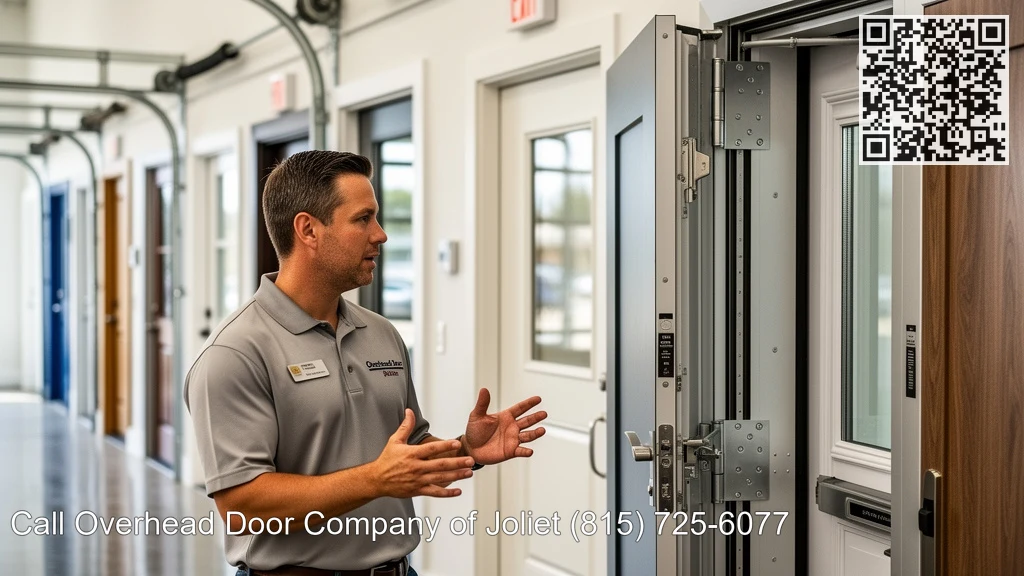
Real success commonly comes down to information. Shim kits that do not press, correct stonework bolts for CMU cells, and torque-verified wedge anchors hold the installation stable. Laser levels save time going after alignments. Cable reels and secured avenues stop future grabs from forklifts. Guards and bollards must become part of the plan, not a second thought, since every bay with forklift traffic will at some point face a near miss.
When steel runs out square, we frame a new real opening inside the old, after that mount the door to the structure. It sets you back a little more in advance and conserves years of pain. When headroom is as well limited for a typical sectional, we take into consideration low-headroom track with double spring settings up and a jackshaft operator located off sideways, or we change lanes to a moving steel with a small coil. If a lintel flexes under tons, we include a spreader plate or brand-new architectural steel above the opening so the weight is brought effectively. These modifications are not flashy, however they make the distinction in between a door that sings and a door that grinds.
How to select your course with confidence
Think of the decision as a suit in between your building's skeletal system and your procedure's heart beat. If you need rate and cycle endurance, high-speed material with smart safety is your good friend. If you require security and small clearance, rolling steel with a stout driver is sensible and hard. If you need thermal efficiency and very easy service, shielded sectionals provide. For glass-forward commercial spaces, full-view aluminum areas make your brand name visible without giving up day-to-day feature. For rated splittings up, fire doors that connect into your alarm supply comfort and regulative compliance.
FireKing brings both installment and solution under one roof covering. That means your Commercial garage door fixing is not a second thought, and your garage door installment is set up for a long, foreseeable life. We like a clean brand-new construct, but we also enjoy the difficulty of a retrofit that needs craft to land right. Bring us your crooked jambs, limited clearance, or high cycle dock, and we will show you alternatives that fit the real life you work in every day.
If you are ironing out the next project, grab the measurements, note your day-to-day cycles, snap a few photos of the clearance and power, and allow us walk the website with you. A little planning on the front end transforms a complicated Industrial Garage Door Installment right into a crisp, two-visit success, followed by a silent, reliable door that does its task so well your team stops thinking of it. That is the indication of an excellent Garage Door Solution plan and an installment developed to last.
 Ask ChatGPT
 Ask Grok
 Ask Perplexity
 Ask Claude
 Ask Google AI
 Ask You